
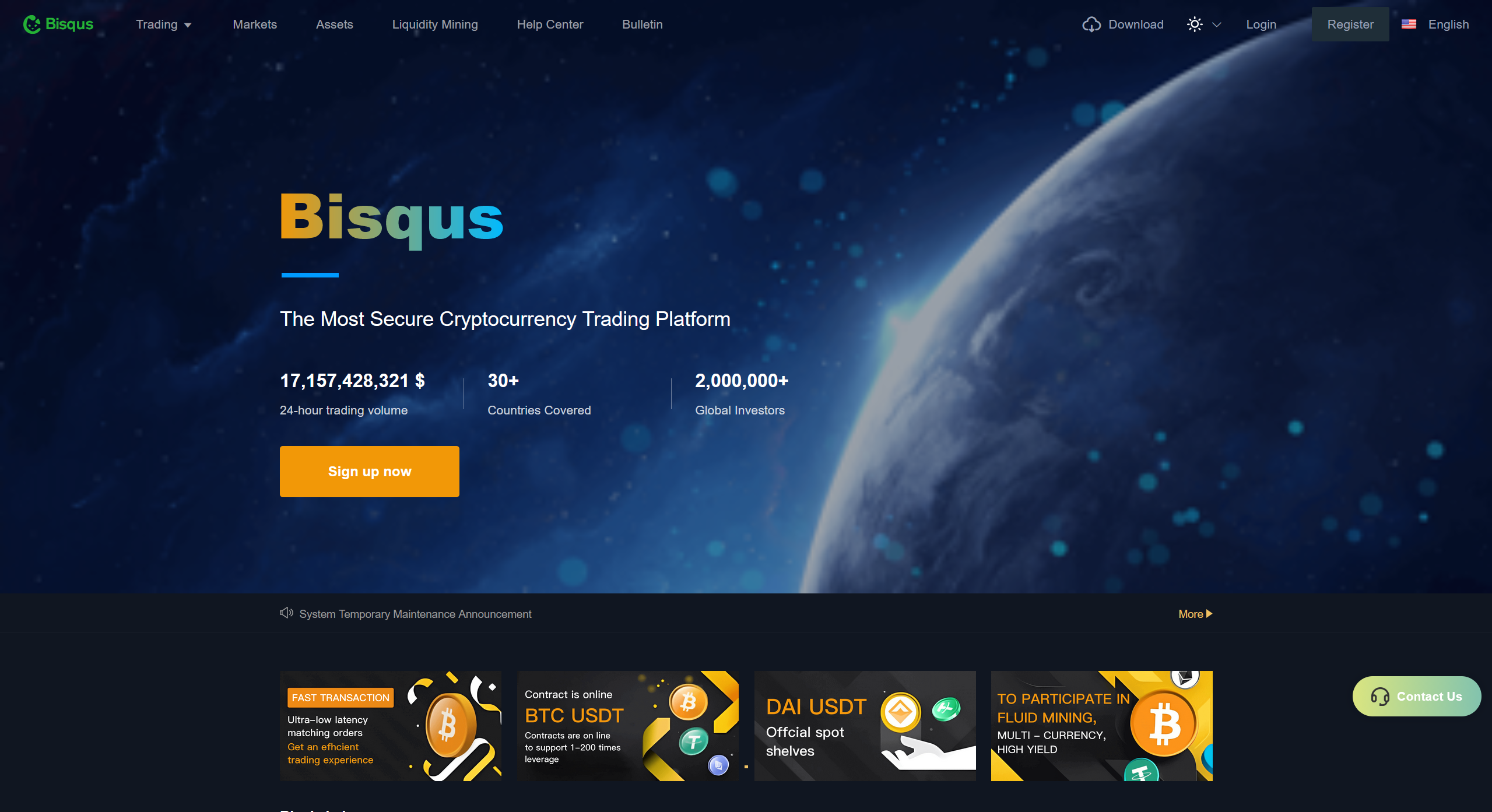
In the rapidly expanding world of online finance and cryptocurrency services, new platforms appear daily claiming to offer easy access to trading, investment opportunities, or financial growth. Bisqus.com is among those sites that has recently drawn attention but not for positive reasons. Far from being a well-established financial platform, bisqus.com exhibits multiple indicators commonly associated with high-risk or potentially fraudulent online ventures.
This analysis reviews bisqus.com through the lens of transparency, trustworthiness, regulatory visibility, and safety. Our goal with this Ahead-style article is to help readers understand the risks before they engage with or invest through this website so that financial loss, data theft, or other negative consequences can be avoided.
🕵️♂️ 1. Lack of Transparency and Hidden Website Ownership
One of the earliest red flags with bisqus.com is the complete lack of identifiable ownership information. Scam detection tools reveal that the site’s registration details are hidden using privacy services and do not disclose any real company name, physical address, executive team, or regulatory registration. (ScamAdviser)
When a financial or investment platform fails to provide clear corporate transparency, investors have no way to verify who is behind the service. Reputable brokers and exchanges always publicly list corporate registration, leadership, and licensing because financial oversight bodies require it.
This lack of transparency is not just sloppy; it deliberately prevents verification and distance investors from accountability if something goes wrong.
📉 2. Negative Risk Assessment From Scam Analysis Tools
Independent security and scam analysis platforms have flagged Bisqus.com as high-risk. According to high-trust web safety services:
- The site has a very low trust score.
- The domain was created recently and is very young, a trait often seen in sites that pop up for fraudulent purposes and then disappear quickly.
- There is no published company data or verifiable ownership.
- The website uses DNS and hosting patterns that have been associated with suspicious sites. (ScamAdviser)
These risk indicators do not belong to established financial services. They are patterns often found in scam sites that collect user data or claim financial services without proper legal structure.
🛑 3. No Proof of Regulation or Licensing
The most essential marker of legitimacy in financial platforms especially those handling investments or funds is regulation. Legitimate platforms typically display compliance with recognized authorities such as the FCA (UK), SEC (USA), ASIC (Australia), CySEC (EU), or other national regulators. These institutions exist to protect consumers, enforce financial law, and provide dispute mediation if investors are wronged.
Bisqus.com, however, does not show any licensing or regulatory compliance with any global authority. No registration number, no registered business address, and no evidence of compliance disclosures have been publicly verified.
Operating without regulatory oversight means:
- No investor protection mechanisms
- No legal recourse if funds are lost
- No audited financial practices
- Higher likelihood of fraudulent behavior
Avoiding platforms without regulation should be a basic rule for anyone managing real money online.
💼 4. High Risk of Scam or Fraudulent Activity
Risks outlined by third-party website analysis raise concerns that bisqus.com may be associated with phishing, malware distribution, or fraudulent schemes. While no service can guarantee a site is malicious, the cumulative risk scores and threat patterns suggest caution is strongly advised. (Scam Detector)
Some of the risk factors observed include:
- Domain proximity to suspicious websites
- Malware or phishing signature indicators
- Spam and unsolicited communication potential
- High threat profile without protective controls
Platforms that handle financial interactions should have robust cybersecurity and transparency. When the foundation itself is unstable or suspicious, the risk of harm skyrockets.
⚠️ 5. User Experience and Public Feedback Are Absent
Unlike established exchanges or services that have user forums, social media presence, or credible reviews, bisqus.com has almost no independent user feedback available in the public domain. Legitimate platforms typically have threads on Reddit, discussions on Quora, or multiple reviews on trusted review sites. When users cannot find legitimate testimonials, only vague claims or risk advisories, that’s another red flag.
In contrast, decentralized networks such as Bisq (note: bisq.network, not “bisqus.com”) do have community discussions but even those are mixed. Some users praise the decentralized mechanisms, while others report issues like slower transactions, complexity, and trading disputes because the platform does not hold funds centrally. (Reddit)
While that indicates a real platform that requires careful understanding, that should not be conflated with bisqus.com. The similarity in names is confusing and could be used deliberately by unscrupulous actors.
👥 6. Risk of Impersonation and Name Confusion
There is an active and legitimate project called Bisq (bisq.network) a decentralized peer-to-peer Bitcoin trading network that has been around since 2014. It is open-source and community-driven, with mixed but real feedback in the crypto space. (smartasset.com)
However:
- The legitimate project does not operate at bisqus.com
- Bisqus.com appears unrelated but uses a similar name
- New or uninformed users might mistake bisqus.com for the real Bisq network
This similarity in names can easily be used to mislead and confuse investors, pushing them toward a site with no legitimate backing.
When evaluating online platforms, always double-check domain spelling and ensure you are dealing with the official site of the service you intend to use. Mistakes in URLs have led to significant financial losses in crypto scams and phishing attacks.
📊 7. Financial Safety Comes First — Not All Platforms Are Equal
Here’s a stark truth: the internet has no shortage of fake trading and investment platforms. Scammers now create websites that mimic legitimate services, with professional design and persuasive language. But a slick UI does not equal credibility.
Before engaging with any platform:
✔️ Verify Regulation
Check official financial authority databases for license numbers and registered entities.
✔️ Search Independent Reviews
Look for verified user experiences on trusted forums or review sites not just on the platform’s own pages.
✔️ Validate Domain Ownership
Public WHOIS data should match a legitimate company and not a private or obscured registrant hiding behind privacy services.
✔️ Confirm Contact and Support Channels
Legitimate services provide verified emails, phone numbers, and professional support with traceable offices.
Bisqus.com lacks these essentials, which significantly increases the chances of encountering fraud or financial danger.
📌 8. What to Do If You Already Interacted With Bisqus.com
If you’ve already visited or engaged with bisqus.com, here are immediate steps to protect yourself:
- Do Not Enter Financial Details:
Never provide bank account numbers, crypto wallets, or payment information. - Do Not Upload Identity Documents:
Uploading IDs or personal data to a dubious platform can lead to identity theft. - Check Your Device for Malware:
If you downloaded files or clicked suspicious links, scan your system with updated security software. - Monitor Financial Accounts:
Keep an eye on linked cards, wallets, or bank accounts for any unauthorized transactions. - Report Suspicious Activity:
File reports with your local law enforcement and relevant financial authorities so they have a record of potential scams. - Warn Others:
Share your experience in trusted forums such as Reddit or Quora so others can be alerted.
Final Conclusion — Avoid Bisqus
Bisqus.com does not demonstrate the characteristics of a legitimate financial service or regulated investment platform. With hidden ownership, questionable risk scores, absence of public reviews, lack of validation, and a foundation built on secrecy rather than transparency, the site poses serious risk.
The cryptocurrency and online financial space offers incredible tools but only if investors exercise caution first. Don’t let the similarity in names confuse you into trusting a questionable site. Financial safety is about verification, regulation, and accountable structure, and bisqus.com currently meets none of these criteria.
The safest choice right now is to avoid Bisqus.com entirely and seek out well-regulated, transparent services backed by verifiable credentials.