
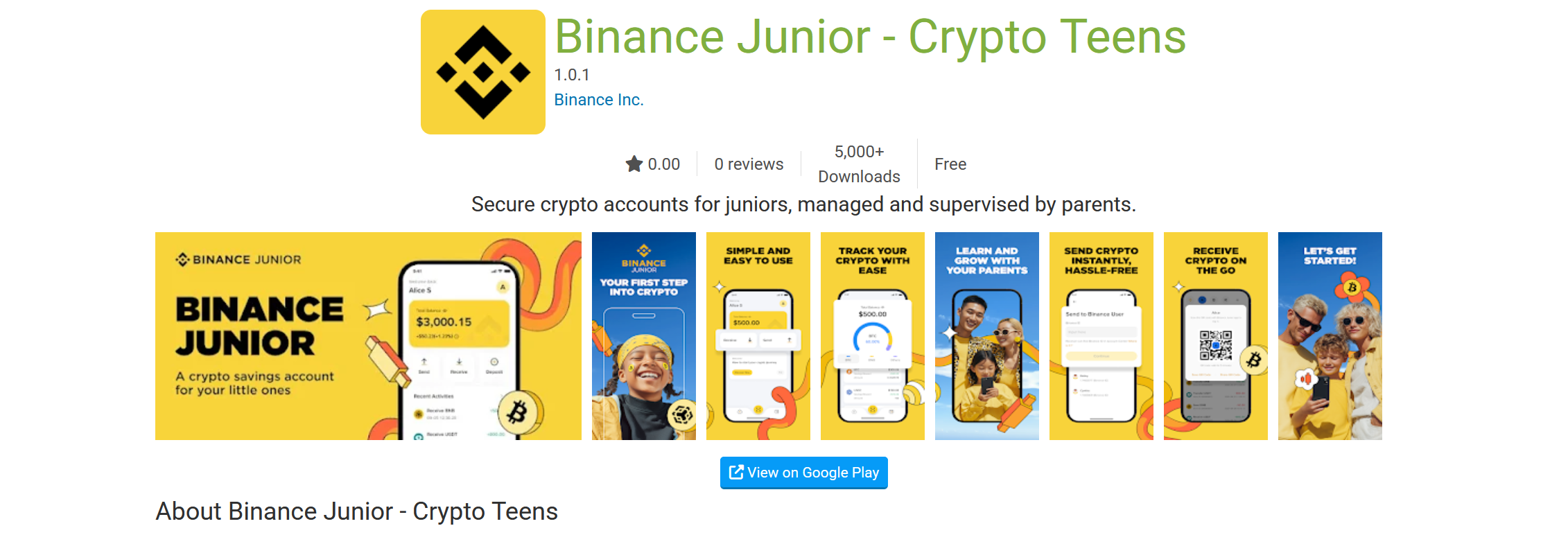
In the rapidly expanding world of digital trading and cryptocurrency platforms, more copycat applications emerge daily attempting to imitate reputable brands. One of the recent examples raising widespread concern is Binance Junior, a platform that misleadingly uses the name of the globally recognized Binance exchange to attract unsuspecting users. Despite its familiar branding, Binance Junior is not an official Binance product, nor is it connected to the legitimate exchange in any verifiable capacity. Instead, it operates as an unverified and suspicious trading environment that puts users at high risk of financial loss.
1. Binance Junior Is Not an Official Binance Product
The most important fact to understand is that Binance Junior does not appear on any official Binance channel, listing, or communication. Major financial platforms are transparent about their products, yet there is no corporate acknowledgment, support documentation, or verified record showing that Binance Junior is associated with the global exchange.
This is a massive red flag for several reasons:
- Scammers frequently clone or imitate reputable financial brands
- Users may assume safety based solely on the familiar name
- No legitimate Binance support team will assist users who lose funds on the fake platform
- There is no recourse or official complaint pathway
When a platform leverages a brand name without authorization, it is not only deceptive—it is dangerous.
2. No Licensing, Registration, or Verified Compliance
Any platform claiming to offer trading, crypto transactions, mining packages, or investment products must operate under strict regulatory frameworks. However, Binance Junior provides:
- No licensing documentation
- No registration number
- No regulatory affiliation
- No corporate identity or official operator
This lack of financial oversight places users in a vulnerable position. Without regulatory accountability, nothing prevents the platform from:
- Blocking withdrawals
- Manipulating data
- Misusing deposits
- Disappearing without a trace
Unregulated apps like Binance Junior are consistently flagged as high-risk in the financial security sector.
3. Suspicious Patterns Matching Known Crypto Scam Apps
Binance Junior displays behaviors commonly associated with imitation, phishing, and unauthorized trading platforms. These patterns include:
A. Artificial Account Growth
Users often see inflated balances or “generated returns,” which are not tied to real market data.
B. Withdrawal Barriers
When investors attempt to withdraw, they face sudden “verification fees,” “upgrade requirements,” or blocked access.
C. Fake Customer Support
Support channels appear active but rarely provide real answers—common in fraudulent platforms designed to delay victims.
D. Pressure to Deposit Quickly
Timers, promotional bonuses, and exaggerated profit claims are used to psychologically manipulate users.
These are not coincidences—these are strategic scam behaviors documented across hundreds of similar cases.
If you have already encountered one or more of these issues, it is essential to
4. False Representation of Safety and Security Technology
Binance Junior uses misleading statements about safety protocols, claiming:
- Advanced encryption
- Multi-layered security
- Protected accounts
- Guaranteed safe withdrawals
Yet none of these statements are backed by technical evidence or third-party audits. Scammers often use vague “security buzzwords” to disguise a lack of real financial protection. Without:
- Public audits
- Verified cybersecurity partners
- Documented protocols
- Transparency
…these claims should be dismissed entirely.
Real trading apps rely on security frameworks—not marketing phrases.
5. No Corporate Transparency or Identifiable Management
Legitimate trading platforms always disclose:
- Key executives
- Legal representatives
- Company headquarters
- Corporate registration
- Operating jurisdictions
Binance Junior hides all of this. There is no identifiable leadership, no operational address, and no traceable ownership. Scammers intentionally conceal their identities because it prevents victims from pursuing legal action.
If a platform cannot tell you who is behind it, where it operates, and under what laws it functions—then it should not receive your money under any circumstances.
6. Misleading Use of the Binance Brand to Gain Trust
The most manipulative aspect of Binance Junior is its use of Binance’s name. It is a typical technique used in brand-impersonation scams. Many victims assume:
- “It must be safe if it has the Binance name.”
- “This is probably a simplified version of Binance.”
- “Maybe this is a new Binance product.”
But these assumptions lead to financial loss.
Brand imitation is one of the fastest-growing scam strategies worldwide, and Binance Junior fits that profile perfectly. The danger lies in how convincing these copycat apps appear right until users attempt to withdraw their funds.
7. High-Risk Deposit Practices and No Fund Segregation
Professional exchanges follow strict rules about how user deposits are handled.
Binance Junior does not:
- Use segregated accounts
- Provide transparent transaction records
- Show custody structures
- Allow traceable internal transactions
- Offer withdrawal guarantees
Funds sent to the app are immediately at risk. They may be redirected to private wallets, offshore addresses, or unknown entities.
Once deposits leave your wallet, you have no control—and no legal path to secure reimbursement from the platform.
8. No Verifiable Reputation or Real User Footprint
Trusted financial platforms naturally accumulate thousands of legitimate reviews over time. They generate:
- Verified testimonials
- Documented user experiences
- Press coverage
- Industry analyses
- Regulatory data
Binance Junior has none of this. The few online comments referencing the platform are typically warnings or unresolved complaints.
A platform with no authentic reputation should never be trusted with real money.
9. The Psychological Engineering Behind Binance Junior’s Interface
Suspicious trading apps use psychological tactics to influence user behavior. Binance Junior appears to use:
- Animated profits
- Reward icons
- Investment bonuses
- “Limited time” offers
- Gamified account dashboards
These features are not designed to improve trading—they are designed to control emotional decision-making.
Scammers understand that when users believe they are earning daily returns, they deposit more. When users see dashboards filled with simulated trading movement, they trust the platform without verifying it.
This psychological manipulation is a documented danger in unregulated crypto apps.
Conclusion: Stay Far Away From Binance Junior—Protect Your Money and Your Security
After examining the structure, lack of regulation, behavioral patterns, deceptive branding, and operational secrecy behind Binance Junior, the conclusion is clear: This platform is not safe and should be avoided at all costs. It is unverified, suspicious, and displays characteristics commonly associated with impersonation-based financial fraud.
Do not trade on Binance Junior.
Do not deposit money.
Do not trust profit claims or dashboards.
Do not believe the illusion of a “Junior version” of a known exchange.
If you have not yet invested—stay away now.
If you have already deposited funds—take immediate action.
If you are blocked from withdrawing—do not wait for further damage.