
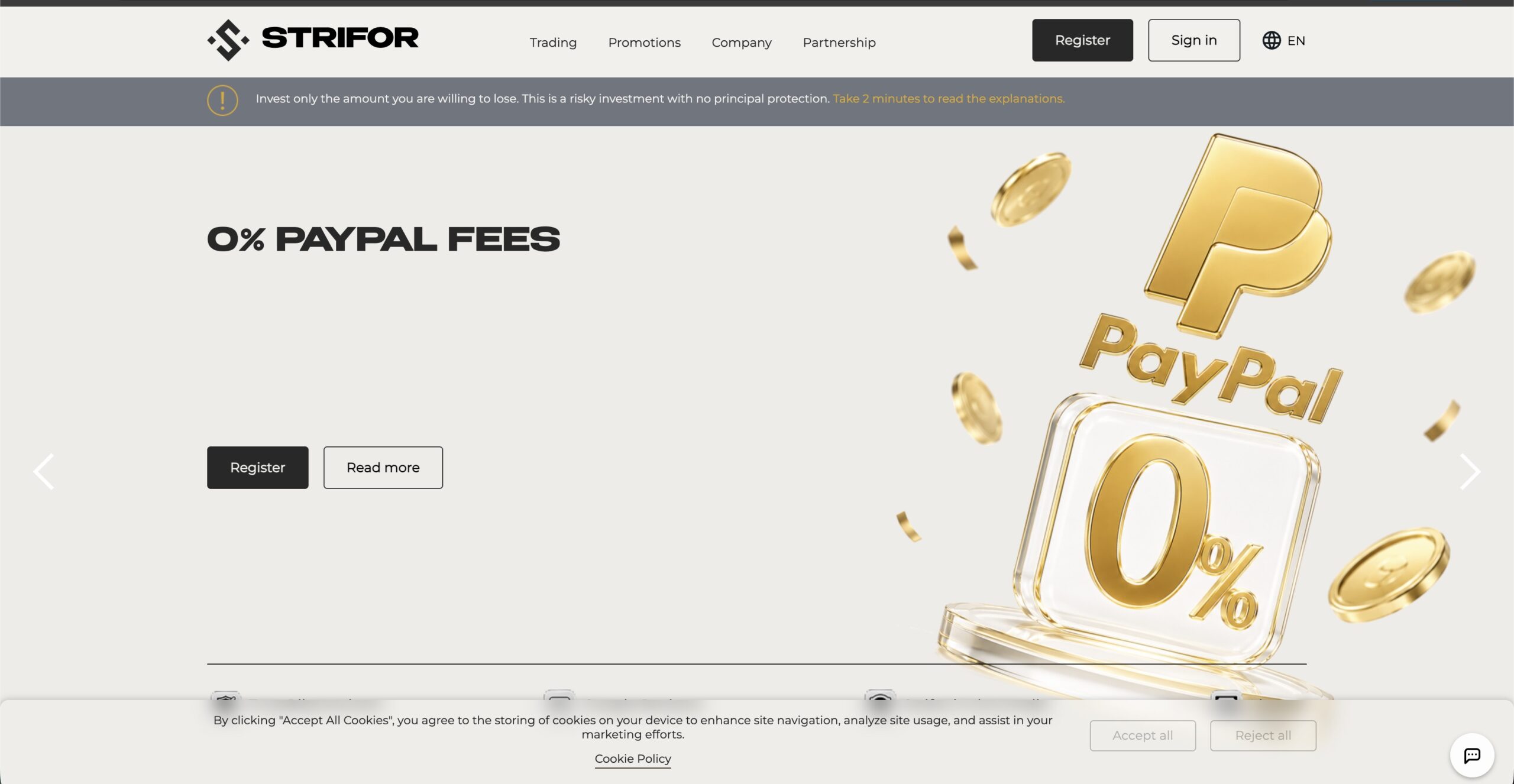
When a trading platform like https://strifor.org/ markets itself as a gateway to financial freedom, the real question is not what it promises—but what happens when you try to get your money back.
This is where most retail investors lose control: not at the deposit stage, but at withdrawal, dispute resolution, and regulatory enforcement.
Below is a structured, evidence-based risk breakdown of Strifor.org, focusing on regulation gaps, withdrawal complaints, and behavioral patterns commonly associated with high-risk brokers.
1. The First Red Flag: Regulatory Weakness
A legitimate broker survives on one foundation: strong financial regulation.
In the case of strifor.org, multiple independent reviews highlight a lack of recognition from top-tier regulators such as FCA (UK), ASIC (Australia), CySEC (EU), or NFA (US) .
Instead, the platform is often described as operating under offshore or weak regulatory structures, where:
- Oversight is minimal or symbolic
- Client fund protection is limited
- Disputes are resolved internally, not externally
- Enforcement power is weak or nonexistent
Here’s the critical issue:
If no strong regulator can force compliance, then “rules” are just internal policies—not legal safeguards.
That creates a structural imbalance between user and platform.
2. Withdrawal Complaints: Where Risk Becomes Real
Across forex and crypto brokerage failures globally, the clearest warning signal is consistent:
Deposits are smooth, withdrawals become conditional.
Reports and analysis around strifor.org highlight recurring concerns tied to withdrawal friction, including:
- Delayed or restricted withdrawals
- Additional verification demands after profit
- Account review freezes after successful trading
- Requests for unclear compliance documentation
This pattern is also seen across many unregulated broker disputes, where withdrawal approval becomes a control mechanism rather than a process.
Even in user-generated reviews, there is a split between positive and negative experiences, but that split itself is not reassuring. It often indicates:
- Small withdrawals may succeed
- Larger withdrawals trigger scrutiny or delays
- Experience depends heavily on account behavior and size
One critical insight from broader broker fraud patterns:
If withdrawal rules are flexible only when you are losing, the system is not neutral.
3. “Profitable Account = Risk Flag” Pattern
One of the most important behavioral indicators in high-risk brokers is this:
- Small deposits and early trades work normally
- Account growth is encouraged (sometimes artificially via leverage or bonuses)
- Once profits grow, compliance pressure increases
At that stage, platforms may introduce:
- “Risk checks”
- “Abnormal trading activity” flags
- “Bonus violation” claims
- “Liquidity protection” rules
These are not automatically proof of wrongdoing—but they are common structural tools used in disputes where payout resistance occurs.
The key mental shift:
A fair system treats profit as neutral.
A risky system treats profit as a trigger for review.
4. Trust Score vs Reality Gap
Automated risk scanners have flagged strifor.org as suspicious or low-trust based on aggregated signals such as server history, traffic patterns, and blacklist associations .
At the same time, user reviews on third-party platforms show mixed sentiment, including claims of smooth withdrawals and stable trading experiences .
This contradiction is important—but not reassuring.
Why?
Because mixed reviews in high-risk financial platforms often indicate:
- Controlled positive feedback loops
- Inconsistent enforcement policies
- Different user outcomes based on account type or size
- Delayed emergence of negative experiences
In other words, satisfaction at small scale does not guarantee safety at larger scale.
5. The “Internal Broker Defense” Problem
Some broker platforms defend themselves by stating:
- “We are regulated in offshore jurisdictions”
- “We follow internal compliance policies”
- “We comply with AML/KYC checks”
Even if partially true, this introduces a serious structural flaw:
Who audits the auditor?
If a broker defines its own compliance rules and also enforces them, then disputes become internal decisions—not independent rulings.
That is the core vulnerability traders underestimate.
6. Withdrawal Delay Psychology Trap
One of the most dangerous aspects of platforms like this is psychological escalation:
- Initial small profits build trust
- First withdrawal succeeds (or appears smooth)
- User increases deposit size
- Emotional investment increases
- Exit becomes harder even if doubts appear
By the time friction starts, users often rationalize it:
- “It’s just verification”
- “It’s normal KYC delays”
- “Support said it will be resolved”
This delay in recognizing risk is what causes most financial losses in broker-related disputes.
7. Investor Protection Strategy (Non-Negotiable)
If anyone still interacts with platforms like strifor.org, risk control is not optional—it is mandatory.
Apply these safeguards:
- Treat every deposit as partially at risk until fully withdrawn
- Never scale deposits without successful withdrawal history
- Avoid reinvesting unrealized profits
- Keep full documentation of transactions and chats
- Test withdrawal early, not after growth
- Do not rely on platform promises of “fast payout”
- Assume internal disputes favor the broker, not the user
This mindset is not pessimism. It is structural realism.
8. Critical Question You Must Ask
Forget marketing pages. Forget testimonials. Ask only this:
If something goes wrong, who has the final authority over my money?
If the answer is:
- “The broker itself”
- “Internal compliance team”
- “Offshore regulator with limited enforcement”
Then you are not in a protected financial environment—you are in a self-governed system with asymmetric control.
Final Verdict: Should You Trust Strifor.org?
Based on regulatory analysis, withdrawal risk patterns, and structural brokerage behavior, strifor.org operates in a high-risk category of financial platforms where user protection is weak and enforcement transparency is limited.
Even if some users report positive experiences, the underlying issue remains unchanged:
A system is not safe because it works sometimes.
It is safe only when it must work for everyone, under enforceable rules.
That condition is not clearly met here.
Stay Away Conclusion
The most dangerous misconception in online trading is believing that early success equals legitimacy.
In reality:
- Early success can be engineered
- Withdrawal friction appears later
- Enforcement power is rarely visible until disputes begin
With strifor.org, the combination of weak external regulation, inconsistent user outcomes, and withdrawal risk patterns places it in a category that demands extreme caution.
The rational decision is simple:
If your capital requires protection, transparency, and enforceable oversight, then exposure to platforms with unclear regulatory enforcement is not an investment—it is a gamble with asymmetric downside.
And in finance, asymmetric downside is the only risk that matters.