
The online trading space is full of platforms that look professional on the surface but rely heavily on branding rather than regulatory substance. Vantotrade is one of those platforms currently attracting attention due to conflicting signals: strong marketing claims on one side, and high-risk classifications from independent reviewers on the other.
This article breaks down what is actually verifiable, where risks appear, and why investors should be extremely cautious before engaging.
What Vantotrade Claims to Be
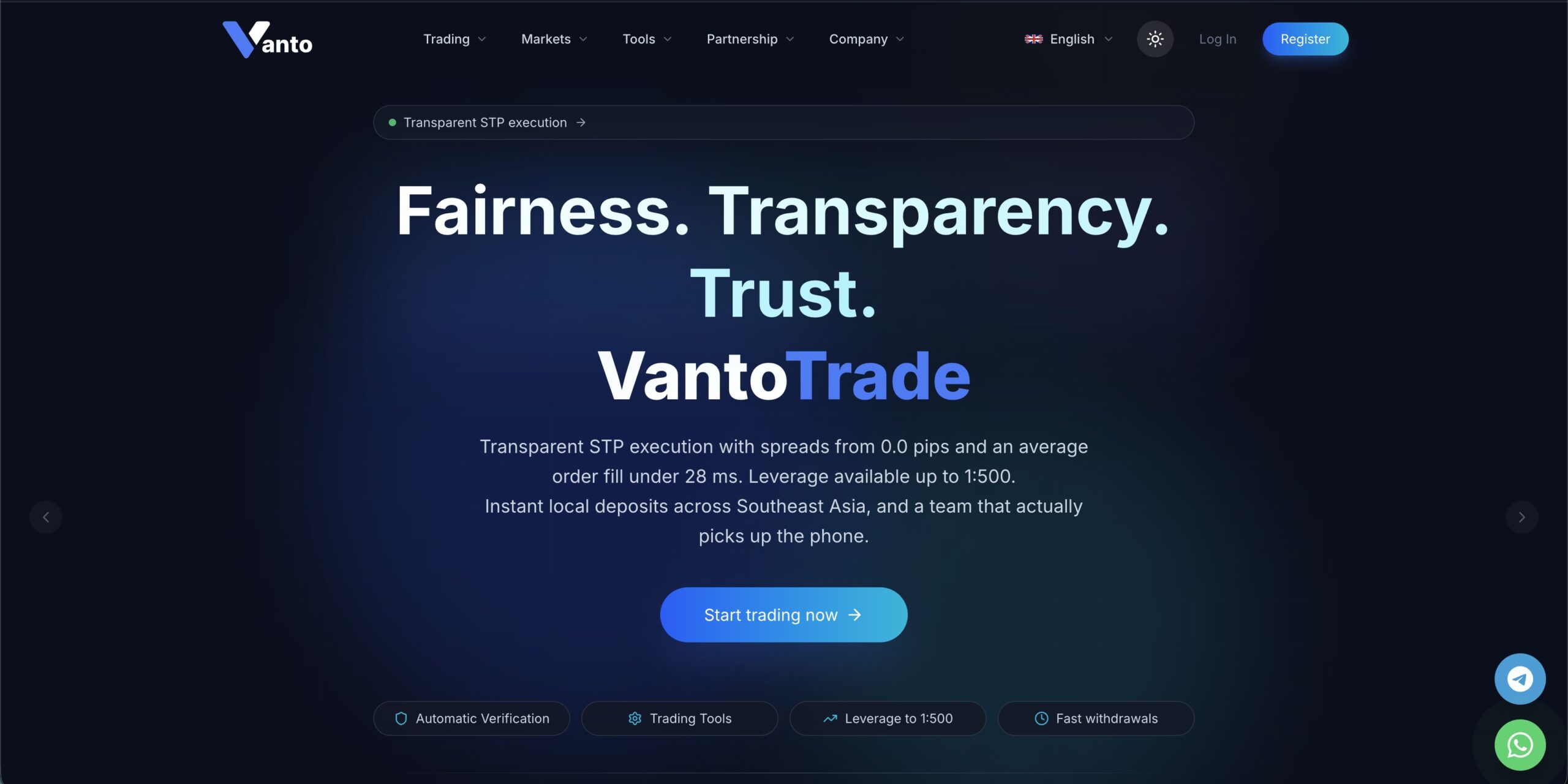
Vantotrade presents itself as a modern forex and CFD broker offering:
- Forex trading
- Indices and commodities
- Cryptocurrency trading
- MT5 trading infrastructure
- “A-book execution” model (no dealing desk)
- Tight spreads and fast execution
The platform emphasizes transparency, liquidity access, and institutional-grade execution, claiming alignment between broker and trader interests. In theory, this suggests a more advanced brokerage model.
However, claims alone are not proof of legitimacy.
Regulatory Status: Core Weak Point
The most important issue is straightforward: Vantotrade does not show verified authorization from top-tier financial regulators.
Independent broker reviews indicate:
- The entity operates as an offshore International Business Company (IBC) registered in Saint Lucia
- It does not hold a license from major regulators such as FCA, CySEC, or ASIC
- Regulatory oversight is therefore limited or non-existent for retail investor protection
Another risk analysis classifies the domain as suspicious with multiple risk signals, including low trust score, hidden ownership, and high-risk financial service indicators.
This combination—offshore registration + lack of licensing—is a classic high-risk structure in online brokerage environments.
The A-Book Claim Doesn’t Solve the Problem
Vantotrade heavily promotes itself as an “A-book broker” with direct market routing and no conflict of interest.
But here’s the stress test:
- “A-book” is an execution model, not a regulatory guarantee
- Even if true, it does not ensure fund safety or withdrawal integrity
- Without regulation, there is no external verification of execution claims
- Clients cannot independently audit liquidity routing
So the claim is marketing-level positioning, not investor protection.
Trust Signals vs Reality Gap
On paper, the platform presents:
- MT5 access
- Copy trading features
- Tight spreads
- Liquidity provider claims
- Fast withdrawal promises
But independent infrastructure checks highlight weak trust signals:
- Very low domain trust score
- Hidden WHOIS ownership
- Low traffic and limited verified operational history
- Offshore incorporation without strong enforcement jurisdiction
This mismatch is important: real brokers don’t rely on trust assertions—they rely on regulatory proof.
Withdrawal Risk Pattern (Most Critical Section)
Across unregulated forex environments, the highest-risk indicator is always the same: withdrawal friction.
Even when platforms advertise “fast withdrawals,” common risk patterns include:
1. Delayed processing after profit
Users often report smooth deposits but slower withdrawal handling once funds are requested out.
2. Compliance-based blocking excuses
Typical explanations include:
- “Risk review”
- “Account verification upgrade”
- “Liquidity provider delay”
- “Bonus conditions not met”
These are commonly used friction layers in high-risk brokerage environments.
3. Fee-based withdrawal unlocking
Some investors in similar platforms report being asked for:
- Tax clearance fees
- Processing charges
- Account upgrade payments
Legitimate brokers do not require extra deposits to release client funds.
Marketing Pattern Analysis
Vantotrade uses a familiar high-conversion structure:
- Emphasis on speed (execution, withdrawals, spreads)
- Technical jargon (A-book, liquidity providers, ECN-style claims)
- Copy trading and contest features to increase engagement
- High leverage offerings (up to extreme ratios in offshore models)
This structure is designed to build trust quickly—but trust built on features is not the same as trust built on enforceable regulation.
Why Offshore Brokers Become High-Risk Quickly
The core structural issue is simple:
- Offshore company registration = legal existence
- Regulatory license = financial accountability
Vantotrade appears to have the first but not the second.
Without regulatory oversight:
- No investor compensation scheme
- No external dispute authority
- No enforceable withdrawal standards
- No capital adequacy enforcement
That shifts all power to the platform itself.
Risk Behavior Indicators Investors Should Watch
If interacting with platforms like Vantotrade, watch for:
- Pressure to deposit more after initial profits
- Account manager-driven trading decisions
- Withdrawal delays without transparent timelines
- Bonus offers tied to restrictive conditions
- Lack of verifiable regulatory license number
Even one of these is a warning. Multiple together form a pattern.
Final Verdict: High-Risk, Not Investor-Safe
Vantotrade is not a clearly proven scam in a legal sense—but that is not the correct standard for safety.
The correct question is:
Can an investor reliably deposit and withdraw funds under independent regulatory protection?
Based on available evidence:
- No top-tier financial regulation
- Offshore registration structure
- Suspicious trust scoring and domain signals
- Withdrawal risk patterns consistent with high-risk broker models
This creates a high-risk exposure profile, especially for retail investors.
Bottom line
Until Vantotrade provides verifiable licensing from a recognized regulator, transparent ownership, and independently confirmed withdrawal reliability over time, the rational position is caution at minimum—and avoidance at best.