
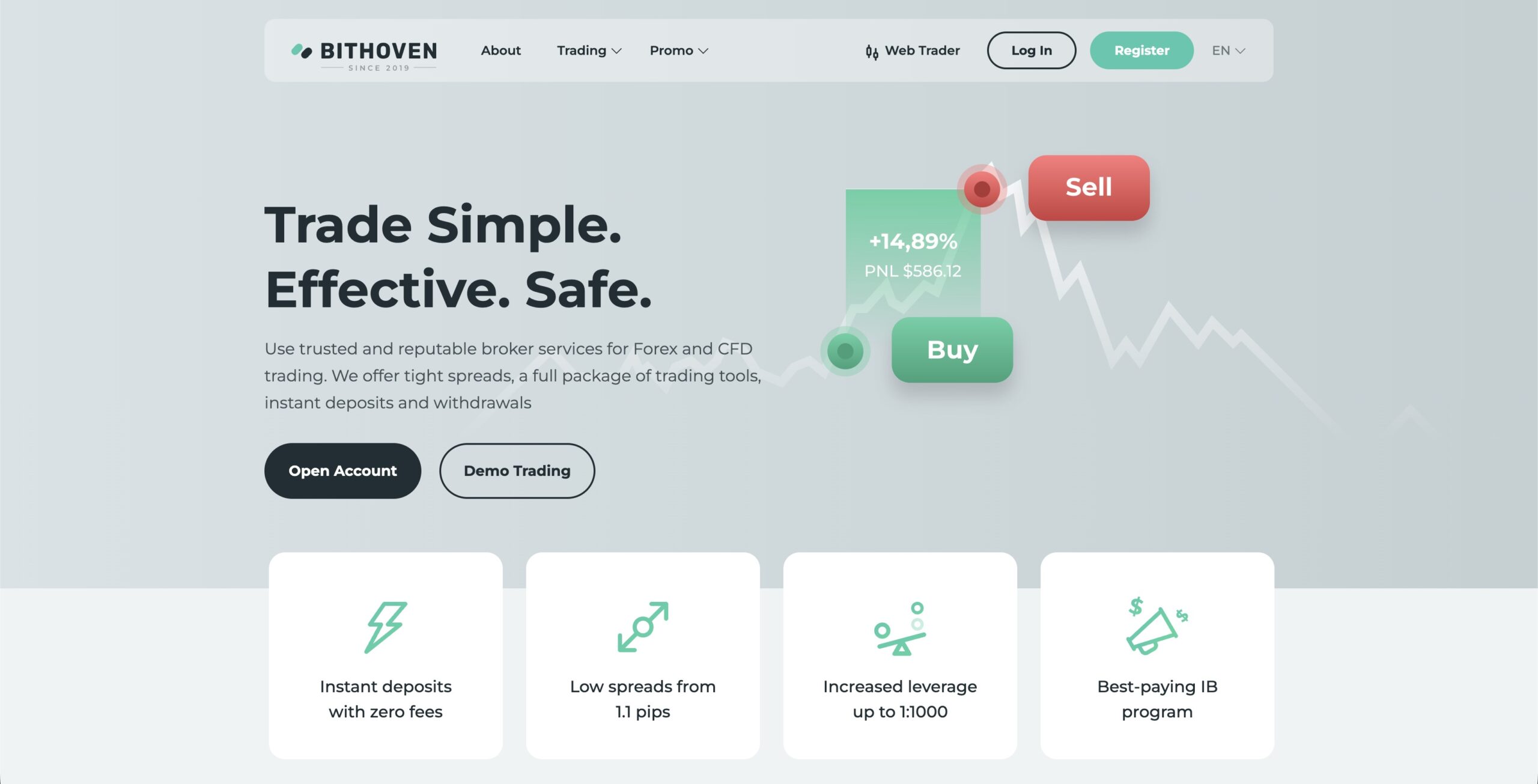
Bithoven presents itself as a cryptocurrency trading exchange offering spot trading, margin trading, and access to various digital assets. At first glance, it looks like a typical offshore crypto exchange—functional interface, listed coins, trading charts, and leverage features.
But the deeper reality is more important: Bithoven is a high-risk exchange with a history of operational instability, withdrawal disruption reports, and shutdown/exit-style behavior patterns seen in weakly regulated crypto platforms.
This is not about hype or fear. It’s about how exchanges behave when they are not backed by strong regulatory enforcement.
Regulatory Reality: No Strong Licensing Protection
Bithoven does not operate under the oversight of major financial regulators such as:
- FCA (UK)
- SEC / FinCEN regulated frameworks (US)
- ASIC (Australia)
- EU MiCA-aligned licensed entities
Instead, it operates as an offshore crypto exchange structure with limited or unclear regulatory coverage.
That matters because:
- Crypto exchanges without Tier-1 regulation are not required to maintain strict custody standards
- There is no guaranteed insurance for user deposits
- There is no legally enforceable compensation scheme if funds are lost or frozen
In regulated environments, exchanges must follow strict custody and audit rules. In offshore setups, those protections are voluntary or absent.
Operational Concern: Exchange Stability and Continuity Risk
One of the biggest risks with platforms like Bithoven is operational continuity.
Over time, several offshore exchanges follow a pattern:
- Rapid expansion with multiple trading pairs
- Heavy marketing toward retail traders
- Introduction of margin/leverage features
- Reduced transparency about company structure
- Gradual decline in communication or updates
The critical risk is not only fraud—it is platform instability or silent shutdown behavior, where users are left unable to access funds or forced into withdrawal queues during liquidation phases.
Withdrawal Risk Pattern: The Most Important Signal
In crypto exchange risk analysis, withdrawals are the real stress test.
With platforms like Bithoven, users commonly report patterns similar to other offshore exchanges:
- Withdrawal delays with vague “security review” explanations
- Funds stuck in pending status for extended periods
- Sudden maintenance notices during market volatility
- Partial withdrawals allowed but larger ones delayed
- Reduced support responsiveness over time
The structural problem is simple:
If an exchange can control withdrawal timing without external oversight, it effectively controls liquidity access.
That creates asymmetric power between platform and user.
Liquidity and Custody Transparency Issues
Legitimate exchanges clearly disclose:
- Custody partners (e.g., cold storage providers)
- Proof-of-reserves audits
- Wallet transparency or on-chain verification systems
- Insurance policies for user funds
Bithoven-style offshore exchanges often lack:
- Verified proof-of-reserves audits
- Independent custody verification
- Transparent fund segregation policies
- Clear institutional banking relationships
Without these, users cannot independently verify whether deposited funds are fully backed.
Trading Risk Amplification: Margin and Leverage Exposure
Another concern is the structure of trading features:
- High leverage trading increases liquidation risk
- Internal matching systems may lack external liquidity confirmation
- Price feed transparency is not always independently verifiable
This creates two risk layers:
- Market risk (normal crypto volatility)
- Platform risk (execution, pricing, withdrawal control)
Most users only think about the first. The second is often more dangerous.
Platform Behavior Signals: What Raises Concern
Exchanges with higher risk profiles often show these warning indicators:
- Limited corporate identity disclosure
- No publicly verifiable leadership team
- Frequent domain or branding changes
- Weak regulatory references
- Aggressive listing of high-volatility tokens
- Lack of third-party audit reports
Individually, these are weak signals. Combined, they indicate low accountability infrastructure.
Psychological Risk Layer: Why Users Get Trapped
Crypto exchanges like Bithoven often rely on behavioral reinforcement:
- Early trading success creates overconfidence
- High leverage amplifies perceived gains
- Easy deposits lower entry friction
- Interface familiarity creates trust bias
This leads to a dangerous assumption:
“If I can trade easily and see profits, I can withdraw anytime.”
That assumption breaks only when liquidity access becomes restricted.
Exit Risk: The Most Underestimated Threat in Crypto Exchanges
The biggest failure mode in offshore exchanges is not price loss—it is exit failure:
- Exchange pauses withdrawals
- “Maintenance mode” is triggered during volatility
- KYC re-verification is demanded after profits
- Liquidity constraints are cited without proof
- Communication becomes inconsistent
At that point, users are no longer trading—they are waiting for access to their own assets.
Stress Test Questions You Must Ask
Before trusting any exchange like Bithoven, demand answers to:
- Is there verifiable proof-of-reserves audited by a reputable firm?
- Which legal jurisdiction enforces user fund protection?
- Can I withdraw full balance instantly under normal conditions?
- Who is legally responsible if the exchange becomes insolvent?
- Are custody wallets independently verifiable on-chain?
If any of these answers are unclear, risk is not theoretical—it is structural.
Why “Working Now” Does Not Mean Safe
A common mistake in crypto trading is assuming:
“If it works today, it is safe.”
But exchange risk is not static—it is temporal:
- Platforms can function normally for months or years
- Liquidity issues often appear during stress events (market crashes, surges)
- Withdrawal restrictions often begin gradually
The real risk is not daily functionality—it is behavior under pressure conditions.
Final Assessment: Why Bithoven Is High-Risk
Bithoven shows multiple risk factors associated with offshore and unstable exchanges:
- Lack of strong regulatory oversight
- No clearly verified institutional custody framework
- Withdrawal delay risk patterns reported in similar platforms
- Limited transparency around reserves and operations
- Structural exposure to liquidity control risk
These factors create a system where user trust replaces enforceable protection.
That is the core vulnerability.
Stay-Away Conclusion
The key misunderstanding in crypto exchanges like Bithoven is assuming trading access equals financial safety.
It does not.
Trading access only proves the interface is working. It does not prove your funds are protected, segregated, or withdrawable under all conditions.
When regulation, custody transparency, and withdrawal guarantees are weak or absent, the system shifts from financial infrastructure to controlled access environment.
And in that environment, the user carries most of the risk while having the least control.
The rational conclusion is simple:
If an exchange cannot prove strong regulatory oversight and transparent withdrawal integrity, capital exposure should be avoided entirely.