
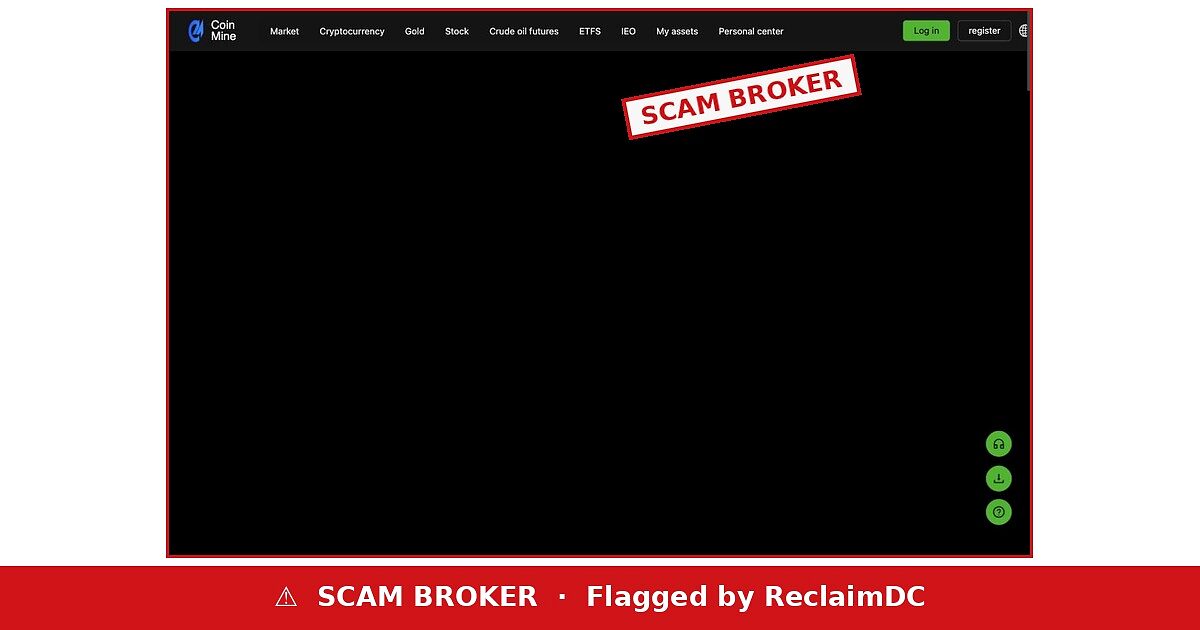
Coin Mine (joincoinz.com) is a trading app shell offering cryptocurrency, gold, stocks, crude oil futures, ETFs and IEOs. Québec’s Autorité des marchés financiers warned about it on 11 May 2026. The domain dates from 2015 — an old address re-used for a new brand.
Coin Mine
joincoinz.com
SCAM BROKER
- Website
- joincoinz.com
- Brand on page
- Coin Mine
- Products
- Crypto, gold, stocks, crude oil futures, ETFs, IEO
- Footer links
- “Client Fund Protection”, “Anti-Money Laundering Program”
- Warning
- AMF Québec, 11 May 2026
- Domain registered
- 4 December 2015 (re-used)
A brand that doesn’t match its address
The site calls itself Coin Mine, but lives at joincoinz.com. The domain was first registered in 2015 and has clearly changed hands. Buying an aged domain is a common trick: older domains look more trustworthy to spam filters and to people who check registration dates.
Everything, but no one
Crypto, gold, stocks, oil futures, ETFs and initial exchange offerings in one app would require several licences in any country. The page lists none, and gives no company name or address — only the line “All rights reserved @ Coin Mine”.
⚠ Verified evidence
- AMF Québec warning about joincoinz.com, 11 May 2026.
- Brand Coin Mine on an unrelated 2015 domain.
- Crypto, gold, oil futures and IEOs with no licence.
- No company or address; only “All rights reserved @ Coin Mine”.
Did Coin Mine cost you money or time?
Tell us what happened on our short complaint form — it goes straight to our support team, nothing to download, and we reply personally.
✎ File a complaint about Coin Mine
Include the website, the dates, the amounts and how you paid. Screenshots help.
Policies as decoration
The footer links to “Client Fund Protection” and an “Anti-Money Laundering Program”. These titles copy what regulated exchanges publish. Without a regulator behind them they protect nobody; they are there to make the page look complete.
IEOs are the bait
“IEO” sales let the operator invent a token, show it rising, and tell users to buy in early. The token exists only inside the app. When users try to cash out, the withdrawal fails or a “fee” is demanded.
If money has gone to Coin Mine
Refuse any extra payment Coin Mine says is needed to release profits. Crypto transfers: give the exchange you used the receiving address and the TXID so it can be flagged. Do not reply to new messages from Coin Mine staff; block the numbers.
- If someone introduced you to Coin Mine, let them know it is flagged.
- Ask your bank’s fraud team to recall the payment to Coin Mine and to flag the receiving account.
How to verify Coin Mine in two minutes
The quickest test is the REGAFI register and the AMF’s black lists at amf-france.org: search “Coin Mine” and, separately, joincoinz.com. Then compare the domain date (4 December 2015 (re-used)) with the history the site claims. The AMF black list is searchable by domain, which catches mirror sites. Search the name with the words “warning” and “reviews” too — victims often post first.
The verdict: Coin Mine is an anonymous app on a recycled domain, and Québec’s regulator has warned about it. Do not deposit.
Sources, checked 3 October 2026: AMF Québec warning via IOSCO I-SCAN (11 May 2026) · RDAP registration record for joincoinz.com · the live page at joincoinz.com, read in full. Warnings come from regulators, not courts. General information, not investment advice.
Rechecked on 17 November 2026
On 17 November 2026 joincoinz.com was still online, under the page title “Coin Mine”.
How to check a warning from the AMF
The Autorité des marchés financiers publishes lists of websites and firms that offer investment services without authorisation. Search the site name and web address there, and check the official registers of authorised firms before opening any account. A firm that names no company, address or licence on its website cannot be checked at all, which is reason enough to stay away. Report the site to the AMF and your bank.
If you already paid
- Stop all further payments, including any “fee”, “tax” or “release charge”.
- Write down every wallet address you sent crypto to and the transaction hash for each transfer.
- If you bought the crypto through an exchange, report the transfers to that exchange’s support and fraud team.
- Report card and bank payments that funded the purchases to your bank as fraud.
- Report the site to the regulator named above and to the police.
- Be wary of anyone who contacts you offering to recover the funds for an upfront fee.